The Talents and the “One Percent”

Proper 28, Year A

Matthew 25:14-30


M
ost of what we would think of today as commercial trade or “investing” in first century Palestine was done by the wealthy one percent—meaning the royalty the and the priests (who took in and spent investments held in the temple, and then traded with them for foreign goods and currency). 
There were two common ways that one with sufficient capital could make a profit from investing. The first was by lending to those involved in the currency exchange business in the Temple. When Jews or others came to Jerusalem from other parts of the world, they needed to change their international currency into the local Jewish currency, and the exchange tables served this purpose. International Jews in particular (and there were many) needed to make a sacrifice in the Temple, but typically only carried Roman currency, with the Emperor’s picture on it, so they exchanged it for local currency, which did not. A wealthy person’s investment in this, from fees, skimming, and exaggerating the exchange rate, could be very high. 
The second form of investment was in mortgage loans or bridge loans to small farmer families struggling to stay afloat in the declining first century Palestinian economy. Most loans made huge returns on their investment because interest rates were so astronomically high by today’s standards—anywhere between twenty-five to fifty percent. (It’s worth noting in this regard that one of the causes of the “lost decade” of the 1980s, for poor and developing countries of the global south, was that the interest charged by banks in the “First World” on loans to countries in the “Third World” rose sometimes to as high as twenty-seven percent.) The purpose for loans then, was primarily for the purpose of getting borrowers in over their heads and then being foreclosed on and losing their property.  They would then either become tenants on what had been their own property, homeless, or join the ranks of the growing number of bandits or revolutionary militias.

Much of the income from these loans was deposited in the Temple to keep the rich from having to pay a Roman tax on it, and to allow them to claim they didn’t have any money on hand when the Sabbath and Jubilee-debt-cancellation years rolled around (a law called the “Prosbul” allowed them put their money in the Temple just before the seventh year, to claim they no longer could afford to cancel the debt). And then that money was often invested elsewhere by the priests who were the financial overseers of the bank’s holdings. There are ancient inscriptions that show Priests investing in trade and commodities using this “tax-sheltered” money drawn from mortgages taken out by poor families in rural Palestine. That’s probably one of the reasons why Jesus decided to occupy the Temple and set up a temporary boycott of currency trading there as his first official act in Jerusalem. And it is clearly the reason why—when the revolution finally came—the angry 99 percenters stormed the temple and burned the mortgage papers that had been held there.

It was also common, as this parable indicates, for wealthy lenders to assign the dirty tasks of originating the loans, collecting on them, and then repossessing the properties, to their servants. It was considered dishonorable for nobility to expand their wealth, and since servants were a class without honor, they were given the job. That gave the lenders the ability to deny any knowledge of wrong-doing if an evicted family’s misery became too public.[1] The story of the widow and the unjust judge is similar to this (Luke Luke 18:1-8, Proper 24 C).
It’s also important to add here that the servants who were entrusted with inflicting this pain on people didn’t do it for monetary gain (because they weren’t paid anything), but instead they did it for the power and prestige they received for successfully managing the company. As the parable says, if they were successful in little, they would be given power and responsibility over much. The lead character in the parable of the Dishonest Steward plays a similar role. Also reflected here is that interest rates were often as high as fifty percent, so it would not be at all unlikely for a steward of a powerful finance family to double or even triple an investment.

In this story, servants one and two clearly went along with this insidious system and were rewarded handily for their efforts. The first put his money into trading (ergázomai, probably in commodities because they were the most frequently traded at the time), and the second in interest-bearing investments (kerdainō, like the loans and currency-trading mentioned above), but both made a healthy profit.

But the third person (often the hero in three-part tales), following the Torah that forbade lending money at interest (Exodus 22.20-30), believed that the system was corrupt, that the leader was evil, that money should not be used as a weapon against homes and farms and families, and he refused to participate. He accused the wealthy one percenter of being a “Sklēros,” someone who is violent, rough, offensive, and thoroughly intolerable. He accuses him of doing nothing on his own to gain his wealth: he doesn’t plant, he doesn’t distribute (diaskorpízō) his wealth, but just by collecting interest on it from the misery of people who were sucked into the downwardly spiraling system.

So he denounces the crime, buries the money, and in the end he gets crucified for his actions. It is telling that he put the money in the ground, which is ultimately owned by God (Leviticus 25:23-28), and it is also where Judas hid his “blood money” when he realized that it had just caused his friend’s death.

So, what are the preaching themes and possibilities in this story? There are two traditional readings of this story. The first is that the (evil, greedy, wicked) Master is Jesus, who left us for a while and will come again at the end of time for an ominous reckoning of how we have used or misused our “talents” (mis-interpreted as skills and gifts). That’s an odd role for Jesus, but it seems to have survived thousands of years of puzzled looks during children’s sermons. A second traditional reading is that God is the (evil, greedy, wicked) Master who does the judging, and who is just as nasty in the end. Making God the “heavy” somehow doesn’t feel any better than making it Jesus, but there you have it. The way that my pastors as a child got around this was to ignore that the third servant got tossed into outer darkness, and gave heroic examples of the non-squandering of our “talents.”

Perhaps, instead, this is not an allegory. Perhaps Jesus was simply saying that if you stand up and denounce an immoral, evil, system, you may have to pay for it. Perhaps Jesus was saying that sometimes—like Shadrach, Meshach, and Abednego in the fiery furnace (Daniel 1–3)—the right thing to do is to offer up your life as a bulwark against injustice, even if it means losing that life.

Perhaps the message of the story is simply that the story is true, and that if you don’t like it, what are you going to do about it?


Notes and comments on this post:

[in response to someone who said that the storming of the temple was Jesus’ way of rejecting the entire corrupt system.]
Janet,
That’s sort of true and sort of not true. It is probably true that the incident as written reflects Jesus personal desire to reject the entire corrupt system, but to be fair historically, only a shrinking number of NT scholars today believe the story actually happened. It may reflect his passions but probably not his deeds.
Most, I think, believe the story was created by his followers some years after he died as a way of fleshing out his occasional statements of distaste for the Temple. But it’s hard to see how it could actually have happened. There were as many as two to three hundred thousand people in and tightly packed around the temple that day, because of the festival, and each of the money changers had armed body guards standing next to them. The odds of his breaking through the crowds and overturning all of the dozens and dozens of tables are not large. And assuming he could have gotten two or three tables turned over, the hired heat would have ushered Jesus into a premature crucifixion with Roman swords purchased with the proceeds of the tables. And assuming he could overpower all of the changers and all of the guards and all of the people fighting in their defense, the crowds were so dense that it’s unlikely that the rest of the people, only twenty to thirty feet away, would even notice. The idea of his driving out hundreds of thousands of people, many armed and powerful, is difficult to imagine, that is short of a major miracle, and none of the Gospels hint that there was one.
I’m just sayin’...
Stan

- - - - - - - - - - - - - - -

Interesting observations Stan. 
On the other hand . . .Borg and Crossan certainly imply in their book The Last Week that they regard this as an actual incident.  (How ironic is it that I’m the one quoting Jesus Seminar scholars on this list?)  Anyway, they seem to consider it an act of civil disobedience, an act of protest that they compare to someone breaking into a recruiting office and pouring blood on the draft card files.  They say that that action wouldn’t bring an abrupt halt to the Pentagon.  It’s just an act that makes a statement of protest.  They don’t say this, but someone else might argue that Jesus did overturn some money changers tables, did upset some dove-sellers and prevent some in the immediate area from carrying stuff through the temple, but that the gospel accounts are exaggerations of the scale of his protest.
What I find very interesting in Mark’s account is the detail that on Sunday afternoon/evening, Jesus went into the temple and looked around and didn’t do anything.  That is consistent with the idea that his action was a planned demonstration, not done on impulse.  He went in on Sunday afternoon to reconnoiter for Monday’s action. 

Kathy
- - - - - - - - - - - - - - - - - - - -

Presuming that we follow this line, that the third servant was actually standing up to the “powers” of his world, what do we do with the line where he says, “And I was afraid, and I buried the money”?
Carolyn


- - - - - - - - - - - - - - - - - - - - - -
About his “fear” I’m not certain, but he could have been simply stating his fear of the harsh ruler, but deciding to stand up to him anyway. Without doing violence to the Greek, the verse could just as easily be translated something like “Even though I was afraid of you, I still went and hid your money.”
On the burying of the money, there are a number of possibilities. The most likely, as I said below, was that according to Leviticus, the land belonged to God and the third servant returned the money to the land, that is, to God. Another possibility, from the Inter-Varsity Bible Background Commentary, is that burying the money was considered the moral way to handle ill-gotten gains. People in the first century believed in “limited goods,” meaning there was only a set amount of things in the universe, so if you made interest on something you did it by cheating or stealing or oppressing someone to get it. The “moral” thing, then, would have been to bury it or hide it (as in Luke’s version of the story). By taking the money out of the economy, he was in effect protecting those who would have been harmed by the money. According to Malina and Rohrbaugh’s Social Science Commentary on the Synoptic Gospels, Rabbinic law taught that burying money to preserve it was considered the honorable thing to do and was the safest way to care for somebody else’s money.[2] Possibly, then, we could say that he was the only moral person in the group. And he was the one who was punished for being moral.
Incidentally, this is just one of many interpretations of the parable that do not follow the standard, “use your ‘talents’ that God has given you” line. David Harrington (Sacra Pagina: The Gospel of Matthew) believes that Matthew intended it as a rebuke of elements within the church who were resistant to change and wanted to do things the old way and wanted to give up and return to the old pre-Jesus days. Those who trace it back to Jesus recognize something similar, but believe Jesus was targeting people within Judaism who resisted working hard to bring in the new Realm of God. Both of those are possible, but different from my interpretation. The fact that with this interpretation the parable recommends the same trade and investment policies that impoverished much of Galilee makes preaching it this way a bit difficult for me, but it is not impossible and I will probably reference it in my sermon tomorrow.
Stan  


Textual notes on Matthew 25:14-30
The Parable of the Talents
14“For it is as if[3] a man, going on a journey, summoned his slaves[4] and entrusted[5] his property[6] to them; 15to one he gave five talents,[7] to another two, to another one, to each according to his ability.[8] Then he went away.[9] 16The one who had received the five talents went off at once and traded[10] with them, and made five more talents. 
17In the same way, the one who had the two talents made[11] two more talents.[12] 
18But the one who had received the one talent went off and dug a hole in the ground and hid his master’s money. 
19After a long time the master of those slaves came and settled accounts with them. 
20Then the one who had received the five talents came forward, bringing[13] five more talents, saying, ‘Master, you handed over to me five talents; see, I have made five more talents.’ 
21His master said to him, ‘Well done, good and trustworthy slave; you have been trustworthy in a few things,[14] I will put you in charge of many things; enter into the joy of your master.’[15] 
22And the one with the two talents also came forward, saying, ‘Master, you handed over to me two talents; see, I have made two more talents.’
23His master said to him, ‘Well done, good and trustworthy slave; you have been trustworthy in a few things, I will put you in charge of many things; enter into the joy of your master.’ 
24Then the one who had received the one talent also came forward, saying, ‘Master, I knew that you were a harsh man,[16] reaping where you did not sow, and gathering where you did not scatter seed; 25so I was afraid, and I went and hid your talent in the ground. Here you have what is yours.’ 
26But his master replied, ‘You wicked and lazy slave! You knew, did you, that I reap where I did not sow, and gather where I did not scatter? 27Then you ought to have invested my money with the bankers, and on my return I would have received what was my own with interest. 28So take the talent from him, and give it to the one with the ten talents. 29For to all those who have, more will be given, and they will have an abundance; but from those who have nothing, even what they have will be taken away. 30As for this worthless slave, throw him into the outer darkness, where there will be weeping and gnashing of teeth.’


[1] Bruce J. Malina and Richard L. Rohrbaugh, Social Science Commentary on the Synoptic Gospels (Minneapolis: Fortress, 1999), p. 149.
[2] Jeremias (Parables, p. 61) says that buying money was the best hedge against theft. That meant that you were free from liability for it. On the other hand, just hiding it (as with Luke) made you still responsible for it in case something happened.
[3] “For it is as if…” (JWsper gar) What is the it in the sentence? “It is as though a man….” This doesn’t fit well as an introduction. The use of gar gives the sense that this is a continuation of the previous teaching, as in, “that about which I was referring before, is as if…” But it doesn’t quite read as though that is the case. John Nolland (The New International Greek Testament Commentary: The Gospel of Matthew [Grand Rapids: Eerdmans, 2005], p. 1014) believes that this introductory phrase was intended for the previous parable about the bridesmaids. David Harrington (Sacra Pagina: The Gospel of Matthew: Vol. 1 [Collegeville, Minn: The Liturgical Press, 1991], p. 352) suggests that Matthew intended the introduction to the chapter (“Then the kingdom of heaven will be like this...”) to encompass both the parable of the maidens and this parable. That is, of course, assuming that Jesus intended this parable to be about the Kingdom/realm, which both (and others) also believe, but that is not totally clear to me that that is the case.
[4] “Slaves” (doúlos; gen. doúlou, masc. noun.). Historically translated “servant,” and more recently “slave,” is actually somewhere in the middle. Not the beaten down image we have of slaves, but not free to find employment elsewhere either. “Generally one serving, bound to serve, in bondage” (Complete Word Study Dictionary) 
[5] “Entrusted” (παραδίδωμι, paradidomi, vb.,aor.) “‘Entrusted’ - give, deliver to. May be stretched to ‘entrust’ although this is reading into the parable. ‘Put them in charge of.”’ TEV” (Pumpkin). “To hand over to or to convey something to someone, particularly a right or an authority—‘to give over, to hand over.’ ὅτι ἐμοὶ παραδέδοται καὶ ᾧ ἐὰν θέλω δίδωμι αὐτήν ‘because this has been handed over to me and I give it to whomever I wish’ Lk 4:6” (Louw-Nida).
[6] “Property” (ὑπάρχοντα, hupárchonta; pres. part. neut. pl. of hupárchō, ὑπάρχω [to exist]). Property, but more generally, “Things which constitute someone’s possessions, goods.” Translating it here as “property” leads one to think in terms of land or buildings, while in the parable it means it as something of value that can be traded or invested, “Talents.” Noland suggests “something like ‘[business] capital’” (John Nolland, The New International Greek Testament Commentary: The Gospel of Matthew [Grand Rapids: Eerdmans, 2005], p. 1014).
[7] “Talents” (talanton, τάλαντον, noun neuter from tláō  [n.f.]). To bear, "talent," a weight, a unit of measurement. Five thousand gold coins", TEV. In New Testament times a talent was a unit of exchange which varied in its value. The word can be used of money or silver or a weight of between 26 and 36 kilos of copper, silver or gold. So, it is a variable amount of money. We tend to think of a talent as a skill, but we draw this notion from the parable, not the meaning at the time."
[8] “His (own) ability” (ἰδίαν δύναμιν, idian dunamin). “Lit., his own or peculiar capacity for business. For some reason, idian, “own,” is seldom translated. The KJV has “His several ability.”
[9] The NRSV leaves out εὐθέως, immediately.
[10] “Traded” (ἐργάζομαι, ergázomai; imperf. ). “To trade, to make gains by trading, ‘do business’” (Thayer). Nolland suggests, “He worked with them (the talents)” meaning he actually put in some effort. “The slave and not just the money is on the job” (p. 1015).
[11] “Made” κερδαίνω, kerdainō, vb.). To make or gain or earn by way of interest. To increase wealth by investments usually in land. Notice that both the five and ten talent people made money through interest. But the first did it through trading in goods and the second just made it, presumably by collecting interest off of investments.
[12] “Though the second slave has less capital to work with, he makes the same percentage gain” (Nolland, p. 1015).
[13] “Came forward, bringing…” It has the sense of being a ceremonial presentation. Luke’s version says “your “Minas have earned ten minas.” Matt here says, “I have made five more talents.” Real pride in his work.
[14] See above on the value of a Talent. Only an extremely rich person could call this amount “little”
[15] “Enter into the joy of your master” (tēn charin tou kuriou sou). “The word chara or joy may refer to the feast on the master’s return. So also in Matt. 25:23” (Archibald Robertson, Word Pictures in the New Testament).
[16] “Harsh” (sklērós, σκληρός, adj., nom., masc.). A Harsh , stern, and unyielding person. Luke’s version of this parable has austere (austerōs), someone who might be inclined to impose an “austerity program” on indebted property owners. “Pertaining to being hard and demanding in one’s behavior—‘hard, severe, demanding.’ ἔγνων σε ὅτι σκληρὸς εἶ ἄνθρωπος, θερίζων ὅπου οὐκ ἔσπειρας. (Johannes P. Louw and Eugene Albert Nida, Greek-English Lexicon of the New Testament : Based on Semantic Domains, 2nd edition. (New York: United Bible Societies, 1989), 1:756.). “to harden, dry up. Dried up, dry, hard, stiff; of the voice or sounds as hoarse or harsh; of things as hard, tough, not soft. In the pl., tá sklērá, the hard things, stands in contrast to tá malaká, the soft things, or with a neg. connotation, the effeminate (1Co_6:9). Also from skéllō (n.f.): skoliós, crooked, warped. (The Complete Word Study Dictionary, (AMG International, Inc.: Chattanooga, TN: 1992, Rev. ed., 1993).

Would Jesus Join the "Occupy Wall Street" Movement?


by John B. Cobb, Jr.

Is That all You Got?


In this Sunday’s New York Times[1] there was an article by Binyamin Appelbaum and Helen Cooper, which discussed the two major debate streams in the Obama White House.

On the one hand, it said, there were people like David Plouffe and William Daley, who want him to hover close to the center and do things that will get through the radical right wing fringe groups that seem to have taken over Congress. Things like patent reform for inventors and free trade agreements with Panama which might, maybe, eventually help the children or grand children of workers in the US who have been put out of work by free trade agreements with Panama. Workers are aghast at them, but big-business and the people whose re-elections they pay for like them a lot. AND they might have a chance at passing a Republican filibuster.

On the other hand, there are people like Gene Sperling, Mr. Obama’s chief economic adviser, who argues for what he calls BIG ideas like tax cuts for businesses that hire new workers. Now, tax cuts for businesses that hire people is not a bad idea (according to studies, they are the only tax cut that helps during a recession)

But the BIG question, it seems to me is: is this all you’ve got? Is it really the case that with the worst jobs recession in seventy years, and a possible future of decades of economic malaise and personal misery, is it really, really true that the only two options the President of the United States is considering are between doing nothing and doing almost nothing? We have 9.2 percent unemployment and 4.6 million homes that are near foreclosure. Is this all we are being offered? More tax cuts are considered a BIG idea? Is it a paucity of brains or of concern that causes this kind of vapid boring thinking? As Arianna Huffington notes in her recent book, Third World America, “Does anyone believe that the sense of urgency coming out of Washington (and here, I’d add the Obama White house) wouldn’t be wildly different if the unemployment rate for the top 10 percent of income earners was 31 percent?...Of course not---the sense of national emergency would b so great you’d hear air-raid sirens howling.”[2]


[1] “White House Debates Fight on Economy,” Binyamin Appelbaum and Helene Cooper (New York Times, August 13, 2011), p. A1.
[2] Arianna Huffington, third World America: How our Politicians are Abandoning the Middle Class and Betraying the American Dream (New York: Crown Publishers, 2010), p. 13.

Who owns America? Hint: It's not China
By Tom Mucha, Global Post

Truth is elusive.  But it's a good thing we have math.

Our friends at Business Insider know this, and put those two principles to work today in this excellent and highly informative little slideshow, made even more timely by the ongoing talks in Washington, D.C. aimed at staving off a U.S. debt default.

Here's the big idea:

Many people — politicians and pundits alike — prattle on that China and, to a lesser extent Japan, own most of America's $14.3 trillion in government debt.

But there's one little problem with that conventional wisdom: it's just not true. While the Chinese, Japanese and plenty of other foreigners own substantial amounts, it's really Americans who hold most of America's debt.
Here's a quick and fascinating breakdown by total amount held and percentage of total U.S. debt, according to Business Insider:

  • Hong Kong: $121.9 billion (0.9 percent)
  • Caribbean banking centers: $148.3 (1 percent)
  • Taiwan: $153.4 billion (1.1 percent)
  • Brazil: $211.4 billion (1.5 percent)
  • Oil exporting countries: $229.8 billion (1.6 percent)
  • Mutual funds: $300.5 billion (2 percent)
  • Commercial banks: $301.8 billion (2.1 percent)
  • State, local and federal retirement funds: $320.9 billion (2.2 percent)
  • Money market mutual funds: $337.7 billion (2.4 percent)
  • United Kingdom: $346.5 billion (2.4 percent)
  • Private pension funds: $504.7 billion (3.5 percent)
  • State and local governments: $506.1 billion (3.5 percent)
  • Japan: $912.4 billion (6.4 percent)
  • U.S. households: $959.4 billion (6.6 percent)
  • China: $1.16 trillion (8 percent)
  • The U.S. Treasury: $1.63 trillion (11.3 percent)
  • Social Security trust fund: $2.67 trillion (19 percent)
So America owes foreigners about $4.5 trillion in debt. But America owes America $9.8 trillion.

For a smart take on how President Obama and House Republicans should end gridlock over debt and deficits, see our new GlobalPost series The Negotiator, which features Wharton's negotiation guru Stuart Diamond.

And to bone up on China's debt — another potentially big global economic headache — check out this interview with brainy-yet-coherent Northwestern University economist Victor Shih, who spoke with GlobalPost's David Case.
How Much Harm Will it Do?

Stan Duncan

Now that we have raised the debt ceiling (or paid off the hostage-takers, depending on your point of view) it might be a good time to review how much damage the deal will do to the economy, to the recovery, and to ordinary people trying to hold down jobs.

Before I try to total that up, here is a brief overview of how we got here. You can skip down if you already know all of this.

Where did it come from?
Our US debt itself (the fact that we have borrowed money) has been around for a long time, but the deficit (the fact that we spend more than we make) was pretty much eradicated during the Clinton years. When president Clinton left office we had a surplus of about $412 billion and we were on track for eventually paying down the total debt itself (which was about $8 trillion). When President George Bush left office eight years later, the entire surplus was gone. The deficit had grown to over $500 billion, and the debt was around $14 trillion.


Liberals and conservatives argue over how much influence President Clinton or the high tech explosion had to do with that, but the fact remains that we had a surplus during his administration. He raised taxes and social spending and unemployment went down. And when people are employed they pay taxes. Remember that part: when people are employed, their taxes pull down the deficit.

President Bush had two unfunded wars, three unfunded tax cuts (one in the spring of 2008 that no one talks about), an unfunded prescription drug program, and a recession. The unfunded programs and tax cuts were like paying money out and the recession kept money from coming in (actually the recession did both: tax revenue went down and expenditures for unemployment insurance, food stamps, etc. went up).

At the end of 2008 and the beginning of 2009 both the Bush and Obama administrations spent hundreds of billions in stimulus to help stave off an economic meltdown. However, a good amount of President Bush’s spending was in loans to Wall Street, which have been paid back, and much of Obama’s was for jobs, which came back in terms of workers paying taxes, so in the long run neither of their programs impacted the deficit in the way that the wars, tax cuts, the drug program and recession did. Economists differ on how much all of these things drove up the deficit (see my previous post on that), but by any estimate except Rush Limbaugh’s, when President Obama took office the US deficit had soared upwards by trillions of dollars.

To be fair, this description of the origin of the deficit comes mainly from economists and observers from the right, left and center. There is an alternative view from people like Senate Minority Leader, Mitch McConnell (R-Ky), who argues that the deficit is the result of the “out of control spending” of unnamed members of Congress (apparently Democrats) between 2000 and 2008, and the “Job-killing tax increases” that President Obama might be pushing on us one of these days. Even though evidence for this view is difficult to come by, it seems to be the predominant opinion held by the media, the White House, and both houses of Congress.

So, where are we now? 
At the beginning of 2011, the Republican leadership in Congress announced that they had kidnapped the debt ceiling and would not let it go free until they had been paid an astronomical ransom in cuts in social spending. And if the Obama administration did not agree to their demands, they would blow up the economy by refusing to allow the federal government to borrow money. That act would throw our tepid recovery back into a deeper recession, families and jobs would be ruined for decades, and our future as a global economic player would be in jeopardy. They didn’t really want to do it, they said, but they had no choice because otherwise somewhere a few decades from now there might come a time when someone might get hurt if they didn’t do it. (They didn’t put it in quite those terms, but you get the idea.)

It is a form of what I call “Economic Apocalypticism,” the belief that we need to cause a catastrophic human apocalypse right now, with pain, suffering, and hunger, in order to create a pure capitalist order generations from now for our grand children. As examples of this, look at the draconian cuts in social spending imposed on poor and developing countries in the 1980s by the IMF and the resulting rises in poverty, homelessness, and illiteracy. It is sometimes referred to as “Shock Treatment” by economists like Jeffrey Sachs and others. It means: cause agony and death for hundreds of thousands of innocent people right now on the gamble that their grandchildren might be able to claw their way back into a middle class life years from now. The theory was common currency in the economic development circles of two decades ago and is apparently also behind the death threats of Congressional Republicans today.

The Democrats and the Obama administration inexplicably believed that the Republicans were not bluffing in their threats to destroy the economy, and moved into protracted hostage negotiations over how much to give up to keep them from killing the planet. Then, according to House Speaker John Boehner (R-OH), Congress agreed to ninety-percent of their demands, with an additional promise that a bi-partisan panel will be set up to decide how much more will be given to them later.

So, what is the damage?
Let’s begin by acknowledging that cuts in social spending will hurt the economy and drive up the deficit. We often hear that it will, of course, also cut the deficit, but not by as much as you think because the people you fire will no longer pay income or sales taxes. Firing people can lower the deficit, but it also to some degree increases it—that in addition to causing fear and pain to millions of innocent families. Cutting social spending in the middle of the worse job losses in seventy years is much like bleeding hemophiliacs to see if it will help them get well. It wasn’t successful in the 1200s, and it probably will not work today.

How much damage will it do? First, the debt reduction plan will cut $3 trillion from Federal spending over 10 years. That comes out to about $300 billion in spending reductions per year. The higher amounts of that, however, are set to be cut in future years so that people won’t feel as much of it before the elections, so for our present numbers let’s assume that only $100 billion will be cut next year.

So, deduct that $100 billion from our annual spending, which is presently around $3.5 trillion, and it will shrink the GDP by about 3%. (The math is 100/3,500.) That, by the way, is probably a bit low because it doesn’t take into account the “Multiplier effect.” Every time a dollar changes in hands there is a value added to it, which adds to the GDP. Direct Government expenditures can increase the GDP by anywhere from 1.20% to 1.75% (tax cuts, on the other hand, are usually a loss). So, the overall loss to the economy is probably larger than my simple equation.

According to a rule of thumb called “Okun's law,” if the GDP is depressed by 3%, then the unemployment rate should go up by about half that, or 1.5%. That is of course, assuming that only jobs will be cut and not waste, so to be fair, let’s assuming that in this first year we will only drive up unemployment by 1%.

Right now unemployment in America is 9.2%. Add another one percent to that and we get 10.2%. What this means is that the number of jobs lost by this act then, comes out to be about 1.5 million jobs next year. And that’s just at the start. More government-caused job losses are to come. Each year they will get larger; each year we will depress the GDP further and hurt families deeper.

Already cut backs in jobs and benefits on state and local levels are one of the major contributing factors in our high unemployment and low tax revenue and the first line of hurt will be state and local governments. One out of every three dollars of state spending comes from the federal government — $478 billion alone in 2010. That will definitely be cut. In the first half of 2011 almost all of the job gains in the private sector were lost again by firings in the public sector. From August 2008 to the present, over 577,000 jobs have been lost to government belt-tightening.

Some of the biggest items that are to be cut in the bill are spending on education and Medicaid for the poor That won't hurt many in Congress, who are generally richer than "average" Americans and prefer private schools for their children, but for the rest of us, it could be one more step in our national decline. Note that nearly every state government has already set its budget for the next two years assuming a certain amount of federal dollars to come in. With this bill, all of those programs will have to be cut back. Local governments will probably try to raise property taxes to raise revenue, but that would be one more drag on the housing market that’s already dragging the bottom. Many local municipalities are already filing for bankruptcy and that will accelerate depending on how fast Washington’s cuts begin impacting them.

As long as we believe that the pain and fear of our recession is not related to Wall Street gambling, Mortgage loan scandals etc., but out-of-control spending by God knows who in our pasts, and that the only way out of it is through cuts in taxes for the wealth and benefits for the poor, and that the only way to find God’s final realm for the next generation is by balancing our checkbook on the backs of the poor, the sick, the elderly and the very young, then we will continue to decline into what looks from this side as an abyss of madness and evil…but that’s just my opinion.

The Tea Party’s War on America


New York Times 
Op-Ed Columnist
August 1, 2011

You know what they say: Never negotiate with terrorists. It only encourages them.


Joe Nocera 
Earl Wilson/The New York Times

These last few months, much of the country has watched in horror as the Tea Party Republicans have waged jihad on the American people. Their intransigent demands for deep spending cuts, coupled with their almost gleeful willingness to destroy one of America’s most invaluable assets, its full faith and credit, were incredibly irresponsible. But they didn’t care. Their goal, they believed, was worth blowing up the country for, if that’s what it took.

Like ideologues everywhere, they scorned compromise. When John Boehner, the House speaker, tried to cut a deal with President Obama that included some modest revenue increases, they humiliated him. After this latest agreement was finally struck on Sunday night — amounting to a near-complete capitulation by Obama — Tea Party members went on Fox News to complain that it only called for $2.4 trillion in cuts, instead of $4 trillion. It was head-spinning.

All day Monday, the blogosphere and the talk shows mused about which party would come out ahead politically. Honestly, who cares? What ought to matter is not how these spending cuts will affect our politicians, but how they’ll affect the country. And I’m not even talking about the terrible toll $2.4 trillion in cuts will take on the poor and the middle class. I am talking about their effect on America’s still-ailing economy. 

America’s real crisis is not a debt crisis. It’s an unemployment crisis. Yet this agreement not only doesn’t address unemployment, it’s guaranteed to make it worse. (Incredibly, the Democrats even abandoned their demand for extended unemployment benefits as part of the deal.) As Mohamed El-Erian, the chief executive of the bond investment firm Pimco, told me, fiscal policy includes both a numerator and a denominator. “The numerator is debt,” he said. “But the denominator is growth.” He added, “What we have done is accelerate forward, in a self-inflicted manner, the numerator. And, in the process, we have undermined the denominator.” Economic growth could have gone a long way toward shrinking the deficit, while helping put people to work. The spending cuts will shrink growth and raise the likelihood of pushing the country back into recession. 

Inflicting more pain on their countrymen doesn’t much bother the Tea Party Republicans, as they’ve repeatedly proved. What is astonishing is that both the president and House speaker are claiming that the deal will help the economy. Do they really expect us to buy that? We’ve all heard what happened in 1937 when Franklin Roosevelt, believing the Depression was over, tried to rein in federal spending. Cutting spending spiraled the country right back into the Great Depression, where it stayed until the arrival of the stimulus package known as World War II. That’s the path we’re now on. Our enemies could not have designed a better plan to weaken the American economy than this debt-ceiling deal.

One thing Roosevelt did right during the Depression was legislate into being a social safety net to soften the blows that a free-market economy can mete out in tough times. During this recession, it’s as if the government is going out of its way to make sure the blows are even more severe than they have to be. The debt-ceiling debate reflects a harsher, less empathetic America. It’s sad to see.

My own view is that Obama should have played the 14th Amendment card, using its language about “the validity of the public debt” to unilaterally raise the debt ceiling. Yes, he would have infuriated the Republicans, but so what? They already view him as the Antichrist. Legal scholars believe that Congress would not have been able to sue to overturn his decision. Inexplicably, he chose instead a course of action that maximized the leverage of the Republican extremists.

Assuming the Senate passes the bill on Tuesday, the debt ceiling will be a nonissue until after the next election. But the debilitating deficit battles are by no means over. Thanks to this deal, a newly formed supercommittee of Congress is supposed to target another $1.2 trillion to $1.5 trillion in cuts by late November. If those cuts don’t become law by Dec. 23, automatic across-the-board cuts will be imposed, including deep reductions in defense spending.

As has been explained ad nauseam, the threat of defense cuts is supposed to give the Republicans an incentive to play fair with the Democrats in the negotiations. But with our soldiers still fighting in Afghanistan, which side is going to blink if the proposed cuts threaten to damage national security? Just as they did with the much-loathed bank bailout, which most Republicans spurned even though financial calamity loomed, the Democrats will do the responsible thing. Apparently, that’s their problem.

For now, the Tea Party Republicans can put aside their suicide vests. But rest assured: They’ll have them on again soon enough. After all, they’ve gotten so much encouragement.

A version of this op-ed appeared in print on August 2, 2011, on page A25 of the New York edition with the headline: The Tea Party’s War On America.

Deficit 101

With Congress tangled in a fight to the death over how many lives we need to destroy in order to save us from a budget crisis we might encounter ten to fifteen years from now, I thought I’d put down some thoughts on the deficit and where it came from.

Before beginning, it’s probably helpful to start by saying that the deficit itself has only been around for a short while. At the end of President Clinton’s term of office, we had a surplus of $236 billion.[1] All of that changed with the Bush Administration, but contrary to what a lot of liberals like to think, he is not the sole cause of the recession.

In the very short term, the biggest contributor to the short fall in revenue is the recession. People lost jobs, businesses collapsed, and federal revenue went from 18.5% of GDP in 2007 to 14.8% in 2010.[2]   

At the same time, spending went up. When people are unemployed, we pay out much more on unemployment insurance, Medicare, Medicaid, social security (people in their 60s throw in the towel and retire early) and so on.

Add to that the Recovery act under Obama and the TARP under Bush (much of which, however, was later paid back) and Federal outlays grew from 19% of the GDP in 2007 to 24% in 2010.[3]

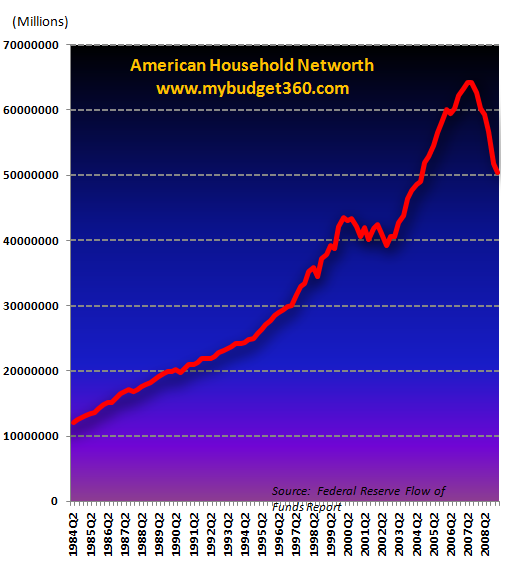
Finally, add to all of that the fact that state and local governments have been firing people at a breakneck pace, driving up unemployment and driving down revenue from taxes. It is estimated that since 2008, as many as 500,000 people have been fired by state and local governments and cut salaries of even more, as a way to help balance their budgets, which is somewhat like bleeding a hemophiliac to see if it will make him get well. The problem in a recession is that a cycle has ended or a bubble has burst and people either have less money to spend or they grow concerned about spending it and the economy grinds down. The way to fix that is to put a lot of money back into the system which adds incomes to some and confidence to others until the machinery begins to run on its own. In this recession, following a small burst of crisis aversion money at the very beginning, our plan instead is to fire even more people and cut even more programs which will make the economic down turn even worse. When the when the housing bubble burst, we lost $4.2 trillion in real estate values. (Yes, that was inflated values, but people trusted it, borrowed against it and based their lives on it, so its loss is a real loss). When you add to that equities, businesses, and other forms of wealth, altogether the US lost around $12.2 trillion since its peak in 2007.[4] So, it’s easy to see how the $300 billion in the TARP program under president Bush (mainly to bail out Wall Street Banks and little for the real economy), and the stimulus package of $789 under President Obama (two-thirds of which were tax cuts to win Republican support and reimbursements to counteract state and local government cutbacks) were only a tiny fraction of what was needed to right the struggling economy.

Other, medium term causes:
Some of of the recession is attributable to the anti-regulation policies of the Bush Administration (a trend which began in the latter Clinton years), some of it is blindness of the Federal Reserve (keeping interest rates too low and allowing the housing bubble to get out of hand) and some of it is the greed and sin of mortgage originators and wall Street gamblers. So, there’s plenty of sin to go around for all of us.

The spikes in the deficit which are most attributed to policies of President Bush are three:

The cost of two unfunded wars.
The Bush Administration said that it would cost between $50-60 billion. Soon after the war began, official government estimates revised it upwards to $1 trillion. Many economists, most notably Linda Bilmes and Joseph Stiglitz,[5] now put the number at over $3 trillion, and say that it will continue to grow for decades. They include not just the fighting itself, but such things as disability payments to wounded veterans and the interest paid on the loans we took out to pay for the wars. More recently, the very well respected Watson Institute for International Studies at Brown University[6] brought together 20 scholars from many fields to bring out the most precise number yet on the costs and they put it at present to be just over $4 trillion, with the additions of interest and health care that Bilmes and Stiglitz included, which are estimated to be just over $250 billion per decade for the next forty years.[7]

The costs of the two major unfunded tax cuts
The Treasury Dept has estimated that costs of making the tax cuts permanent for everyone is $3.7 trillion over 10 years.[8]
The center on Budget ande Policy Priorities says the tax cuts will create almost $7 trillion in deficits from 2009 through 2019, including the associated cost of servicing the debt.[9]

The cost of unfunded Medicare Prescription Drug plan.
The Bush administration won support in Congress for his plan in a very tight vote by claiming that it would only cost $400 billion over ten years. After it passed they recalculated and discovered that they were off by about $800 billion but instead would be closer to $1.2 trillion. Since then projections are as high as $2 trillion.

Many progressives supported this, because there’s nothing wrong with increasing healthcare. But the question why there were no provisions to pay for it, and why the Bush administration blocked the administrators from using free market forces to “jawbone” down prices from the drug manufacturers. It could have been a golden opportunity to start lowering health care costs, but the legislation prevents itself us from doing that.

Speaking of health care…

In the Long term, Health Care is going to be the biggest driver of the deficit.
The costs are rapid and dramatic and will soon be unsustainable. There were a number of provisions in the Affordable Health Care Act that would have slowed its rise, but they were blocked, mainly by members of Congress who receive major campaign contributions from the health care industry (I’m not accusing them of anything, I’m just saying…)

If our health care costs were rising at the rate of the other wealthy countries of the world, we would not be having a long-term problem with health care.[10] (But, then, if we took advice from the rest of the world it would be an attack on the myth of American exceptionalism and it would mean becoming commie socialists and taking care of our own people and we could never live with such a thing.) Social Security, by the way, while slowly running out of money, is not a major driver of our growing debt. Its total shortfall is projected to be 0.7% of total GDP of the next 75 years. That will actually have a very small impact on the budget compared to the recession and tax cuts, which will, over the next decade, consume 1.5% and 2.6% of GDP respectively.[11]


[1] You can download an Excel chart of that by going here: www.whitehouse.gov/omb/budget/Historicals
[2] http://www.cbo.gov/ftpdocs/108xx/doc10871/01-26-Outlook.pdf
[3] Ibid.
[4] http://www.mybudget360.com/the-balance-sheet-recession-42-trillion-lost-in-residential-real-estate-value-yet-mortgage-debt-down-by-140-billion/
[5] Joseph E. Stiglitz and Linda J. Bilmes, “The true cost of the Iraq war: $3 trillion and beyond” (The Washington Post, Sunday, September 5, 2010  http://www.washingtonpost.com/wp-dyn/content/article/2010/09/03/AR2010090302200.html
[6] See “Costs of War” (http://costsofwar.org).
[7] Caring for US veterans, “Costs of War” http://costsofwar.org/article/caring-us-veterans.
[8] “Bush tax cuts: What you need to know,”  http://money.cnn.com/2010/09/15/news/economy/bush_tax_cuts_faqs/index.htm
[9] Kathy Ruffing and James R. Horney, “Critics Still Wrong on What’s Driving Deficits in Coming Years Economic Downturn, Financial Rescues, and Bush-Era Policies Drive the Numbers,” June 28, 2010 (www.cbpp.org/cms/?fa=view&id=3036#_ftnref6)
[10] http://www.oecd.org/document/30/0,3746,en_2649_34631_12968734_1_1_1_1,00.html
[11] http://www.cbo.gov/ftpdocs/108xx/doc10871/01-26-Outlook.pdf

Home Prices Fell Through The Floor. Mortgage Debt Didn't.

by Jacob Goldstein
In the past few years, home prices have fallen back to where they were before the bubble. But mortgage debt still has a long way to go.
  Bringing debt levels back down — what economists call de-leveraging — is a long, painful process. It's a key part of the bust in the boom-and-bust cycle, and it's often characterized by slow economic growth and high unemployment.
One recent study found that the de-leveraging process typically takes as long as the credit boom that preceded it. That study found that the recent credit boom lasted for about a decade, and ended in 2007.
So if the pattern holds true this time — and that graph above suggests it might — we will be in for several more years of de-leveraging.
The CalculatedRisk graph above is based on data from the Fed's latest Flow of Funds report, which came out today.

The Obama Deception: Why Cornel West Went Ballistic

http://www.truthdig.com/report/item/the_obama_deception_why_cornel_west_went_ballistic_20110516/

Posted on May 16, 2011

Don't Hold a Bake Sale

Recently, researchers Sanjai Bhagat and Brian Bolton studied the stock holdings and sales of the 14 CEOs who headed the 14 US financial institutions that received TARP funding to survive. The list included the losers after the 2008 meltdown (like Lehmann bros.) and winners (like Goldman Sachs).

All of them owned stock in their own financial institution and all of them traded their stock as individuals. Cumulatively, in 2000, the 14 CEOs held $6.8 billion of their own institution’s stock (about $485 per CEO) and from 2000 to 2008, their wealth from trades grew to $1.8 billion each.

When the crash came, they had paper losses of $2.0 billion in the crash, but their personal wealth had collectively grown by $649 million and they still had $939 million in net stock holdings. Even with all of their losses, they came out of the disaster with a profit of $46 million per CEO with another $67 million in their stock portfolio.

(And this is unrelated to their official compensation which averaged about $890 million per person, per year.)

Meanwhile, among the recipients of their greedy, immoral, and frequently illegal behavior, millions lost their jobs, millions more lost their homes, tens of millions were thrown into poverty, and even more kept their jobs but had severe declines in income. And not one CEO is in jail. 

For more on executive pay, see http://www.huffingtonpost.com/roger-martin/post_2008_b_857945.html