Violence-oriented Hate Speech in the Media


* Utah GOP Senatorial candidate, Sharron Angle: "People are looking towards the second amendment remedies and saying my goodness, what can we do to turn our country around."

*Sharon Angle: "The first thing we need to do is take Harry Reid out."

* Rep. Michele Bachmann (R-MN): “I want people in Minnesota armed and dangerous on this issue of the energy tax because we need to fight back. Thomas Jefferson told us ‘having a revolution every now and then is a good thing,’ and the people – we the people – are going to have to fight back hard if we’re not going to lose our country.”

* Michele Bachmann: "I’m a foreign correspondent on enemy lines and I try to let everyone back here in Minnesota know exactly the nefarious activities that are taking place in Washington."

* Glenn Beck: "I want to kill Charlie Rangel with a shovel."

* Glenn Beck: "Every night I get down on my knees and pray Dennis Kucinich will burst into flames."

* Texas GOP candidate Stephen Broden: ''Our nation was founded on violence. The option is on the table. I don't think that we should ever remove anything from the table as it relates to our liberties and our freedoms.”

* Ex-Alaskan GOP Governor, Sarah Palin: "Don't retreat, reload." Also called several opposition candidates “targets,” and posted online a US map with rifle cross hairs over their districts (the map has been withdrawn and her staff are now referring to the cross hairs as "surveyors' marks").

* Joyce Kaufman, Chief of Staff for Florida GOP Congressman, Alan West: "If ballots don't work, bullets will."

Not actually violent, but close: 

*Newt Gingrich, on the Obama administration: “The secular socialist machine represents as great a threat to America as Nazi Germany or the Soviet Union once did” (from his new book, To Save America: Stopping Obama's Secular-Socialist Machine). 

* Newt Gingrich: Obama is “the most radical president in American history" (Southern Republican Leadership Conference in April, 2010).
 
* Rep.Darrell Issa (R-CA) President Obama is "one of the most corrupt presidents in modern times."
As new incoming chair of the House Oversight and Government Reform Committee, he promises to hold investigations for such crimes as alleged promises by the Administration to Pennsylvania Congressman Joe Sestak to drop out of his Senate race in 2010, and allegations that following its investigation, the Justice Department downgraded the number of members of the “New Black Panther Party,” who intimidated voters on election day, from five to two.

* Rep. Louie Gohmert (R-TX), is preparing legislation that would exempt members of Congress from the Washington, DC, ban on carrying concealed weapons. The legislation would also allow members to carry weapons onto the floor of the House and Senate for protection from snipers.

* Rep. Gohmert also said in a speech on the House floor following the shootings in Arizona, that he believed the FBI had "stonewalled" Congress in it's briefing about the incident because of its fear that the liberal politics of Jared Loughner would be embarrassing to the President. He said, "It may be that if the things that we're reading -- that he's a liberal, hates the flag, supports Marx, that type of thing, turn out to be true, then it may be embarrassing to some of the current administration's constituents, and, heaven help us, we wouldn't want to embarrass any of the president's constituents."


Nominations for 2010’s 
“Most Embarrassing Christian Award” 
are in, 
and the ballot is below. 
Cast your vote today.

This award is for the person or persons who have done the most awful, embarrassing thing in 2010, while believing he or she is honoring Jesus. The recipient must sincerely believe that he or she is being faithful, while at the same time humiliating the rest of Christendom in the process. This is your opportunity to vote.

The award will be given out at a special ceremony in my daughter’s garage sometime next year when we get around to it. The ceremony will include a press conference, a media presentation, and potluck supper with Jell-O salads. The winner and all of the nominees will be invited to attend to pick up his or her award in person. Special recognition will go to the honoree who actually comes.

There is a second award for people who have been about the task of embarrassing Christians for a long, long time. This is the first year for this award and will be called the "Fred Phelps Life-Time Achievement Award," named for the pastor of the Kansas-based Westboro Baptist Church who attends funerals for slain soldiers of the war in Iraq with signs claiming that the young man or woman was killed by God to punish America for tolerating homosexuals. We are proud to announce that Fred himself will be the first winner of the award in his name.

To cast your vote, send an email  message to the following address with the numbers 1-5 in the body of your note. 
jubileejustice@aol.com

This year’s nominees for the prestigious MEC Award of 2010 are… 

1. Christians who hate Christopher Hitchens
This is a group nomination. Hitchens is a militant atheist who wrote the book, God is not Great, and regularly insults and demeans anyone who holds any religious view on any topic. He also, however, is very ill, and probably dying, with cancer of the throat. 

In responding to his illness, a number of well-intentioned (one hopes) Christians sent him messages on his web page with comments like, "How apropos, losing the throat with which he used to blaspheme"; "this foul reprobate in the end, knowing he shall die, will beg for forgiveness"; and "I can't wait until the last little breath in his miserable body starts to fade, and then he will know if there is a God or not." I’m sure that that last comment really touched Chris and encouraged him to convert.

Some people even sent similarly worded sweet comments about him to their local newspapers and posted them on "Christian" web pages. 

 
2. The guy who regularly shows up at Obama rallies 
and rails against his lack of religion, and campaigns to establish a more enlightened Christian nation. He carries a sign saying "I'm Voting for the Ten Commandments For Presnident." That’s about all that needs to be said about him. 


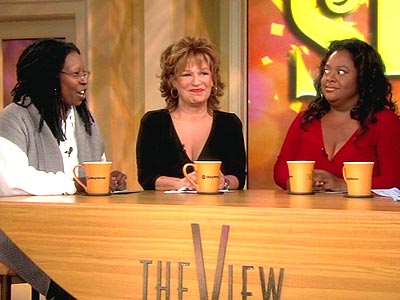
3. Sherri Shepherd, co-host of the View. 
I’m not a viewer, but I’m told that Shepherd regularly says odd and embarrassing things in the name of her Christian faith. She has refused to acknowledge that the world is round, she takes the creationism side of the evolution debate, and in the statement that garnered her this year’s nomination she says that Christians existed before the Greeks and Romans. Whoopi Goldberg tried to jump in and save her by suggesting that maybe she meant Jesus as “the Word” (i.e. John 1:1), but she didn’t bite. She seems to literally believe that Jesus pre-dated the rest of history. And (worst?) she clearly thinks that this belief makes her a good Christian.


4. Pastor Terry Jones and his “Burn a Koran” Day. 
A protestant Pastor in Gainsboro, Florida gained international fame and shame for his attempt to show those awful, meanie “Moslems” that some of our fundamentalist Christians can be just as crazy as some of their fundamentalist Muslims. He stated that he believed that burning thousands of Muslim holy books would spark inter-religious dialog and would somehow discourage Imam Feisal Abdul Rauf from building a community center in Manhattan. For one brief moment in time he succeeded in unifying the entire planet in opposition to the plan. According to very scientifically produced surveys, for the week of his scandal, every man, woman, and child on earth thought he was stupid, with the possible exception of my cousin Ralph, who thought that “burning the Koran” had something to do with Cajun cooking. See below for a CNN interview with him. 


5. Evangelist Pat Robertson

Also a nominee for the Fred Phelps award has had long career of statements about God and national tragedies that make “normal” (more or less) Christians cringe. His statements this year were in January 2010, following Haiti’s earthquake that killed possibly more than 100,000 people, when he said that "It may be a blessing in disguise." On his "700 Club" program Robertson elaborated, saying, "They were under the heel of the French, you know Napoleon the third and whatever. And they got together and swore a pact to the devil. They said 'we will serve you if you will get us free from the prince.'...so the devil said, 'ok it's a deal.' And they kicked the French out. But ever since, they have been cursed by one thing after another." 

My Sunday School teacher taught me that there was some good in everybody if you just try to look for it in prayer. It's good advice, because Pat has managed to keep me in prayer for a good many years.

 
And now for a serious thought
The serious message in this award (and there is one) is that when people with odd and strange "takes" on Christianity (or religion in general) get into the media for their odd and strange behavior, the rest of mainstream, middle of the road, decent Christians get painted by the same brush.

The message is that, while you as a loyal churchgoer and follower of Jesus may spend your time building Habitat Houses, or writing Congress on behalf of poor people, or hosting bake sales for the youth group, or teaching church school, or visiting the nursing home, as soon as someone is interviewed on TV because she saw the face of Jesus in her Big Mac bun, a lot of society looks at us and thinks we’re just as crazy. It's a tough world, and one of the few things we have to fight back with is sanity and humor. It’s easy to get defensive about that. It takes more patience and wisdom to look at some of these oddities and say, “Yeah, well, we think they’re pretty funny too, but they are NOT us.” Vote for the MEC of the year and remember Mark Twain’s words: “Against the assault of laughter, nothing can stand.”

A little greeting borrowed from our friends at the Equal Exchange Interfaith Program


A Taste of Justice
TOJ_nav_01.jpg Our Website Our Blog Interfaith Webstore Recipes Forward to a Friend
Equal Exchange Interfaith Program Team wishes you a Happy New Year
The Interfaith Program wishes you a lively and lovely 2011. Partnering with small farmer co-ops around the world means creating a more just and green food system. At our worker co-operative, Equal Exchange, it is our joy to partner with you and your communities in this endeavor. Thank you for your support and great work!

Best Wishes,

The Equal Exchange Interfaith Program Team


Back Row: Aaron Dawson, Esther West, Jamie Gallagher, Suzanne Keleher, Peter Buck.
Front Row: Cody Squire, Susan Sklar, Darya Mattes, Anna Utech, Charlie Brandes, Hope Kolly, Phil Berry, Molly Zeff.

Saving Rates in the US


This graph from the "Calculated Risk" web page, shows the saving rate starting in 1959 through November of this year. (Right click on it to see a larger version.)

There are several interesting things to note in it. The first one is that our savings was on a more or less steady rise from the 50s to the 80s. It peaked a couple of times in the 70 and early 80s, but then went on a steady decline (with a few up and down blips) to about 2006. Then it went steadily upward.

The second thing is that 2006 date. That hints to me is that the "people" began seeing the crisis coming earlier than the "experts," who were still denying that we had any problem until the major banks on Wall Street (Lehmann, Merrill, and Bear Stearns) began to collapse.  

Third, there is a hint that the savings surge might be beginning to taper off. It hit a peak in January 2010, and has gone down and is projected to stabilize after that.

That may mean that most of the "adjustment," as they call it, has already happened and consumption will go up with income growth next year. That may be a good thing for the over all economy because it will mean that people are spending more and generating more sales and hirings. Instead of socking money away every week, people are spending it in the market place, which moves money around in the economy, and that creates jobs. Hopefully it is a sign that we are beginning to (slightly) trust the market not to crash on us if we go out and buy a few things for the family.

On the other hand, I don't want us to go back to the place we were before, when we were spending more than we were making and going increasingly into debt. No only would that be a return to some of the unhealthy behaviors of the last generation, but it also says something about our inability to either recognize or deal with the larger political and economic forces that brought us here.

Part of the reason we slid so far into debt was that, for most of us, our incomes were either declining or stagnating, so we borrowed to make it up. Our personal pride prevented us from accepting we weren't growing and our collective blindness kept us from understanding the market decisions that caused it. There were intentional policy decisions made in Congress and the global financial centers that sucked money out of the economy and upward from the poor and middle class and then blamed it on evil taxes and a bloated government. In one way or another, we were all participants in a spiritual ethos that said that human beings must continually be getting better and better (read "wealthier and wealthier"). When that stopped happening, we either took it inward and blamed our personal shortcomings and inadequacies, or we projected it outward and blamed the socialist government that took our taxes and redistributed them to undeserving welfare cheats.

The thought that we were not going to be richer than our parents (or as rich as we thought we deserved) was an assault on our collective self-concept. But instead of blaming a market system that was stacked and organized against us, we blamed ourselves or a wasteful government. And instead of changing the system and forcing some of that money back downward from "the rich" to "the rest," or on the other hand instead of learning to believe that goodness and joy could be found in a non-growing income (both positive at different levels), we decided to borrow, and borrow, and borrow. And then when the crash came, we paid for it big time. While much of the blame for the housing crisis was the result of a demented financial system that demanded more and more borrowers to fund Wall Street's gambling addiction, some of it was our desire to own a home, or own a bigger home, to prove to ourselves that we were not as insignificant as our incomes told us we were.

So, while on the one hand, I'm pleased that we started saving again instead of incessantly borrowing. And I'm a little bit pleased that we may be slightly spending again in ways that may help bring the economy back up a little. On the other hand, I'm nervous that we may not have learned the right lessons. Certainly the Wall Street survivors only learned that if you are clever you won't be punished for your sins. If the Tea Party movement is the public voice of this blame-ourselves-or-blame-the-socialist mentality in America, then Main Street may not have learned anything at all. 


Two important things to do during your Thanksgiving holiday to help fight world hunger

From David Kane, at the Maryknoll Office for Global Concerns, reprinted in the Tikkun DAILY blog by Dave Belden, posted there on November 26th, 2010


Two urgent situations require quick action from those who are concerned about world hunger. Your action can help counteract the massive presence of banking lobbyists in Washington. At a time when we give thanks for food on our plates, let’s help make sure that is a reality for people across the U.S. and around the world.

In 2008, price bubbles in food and energy prices led to $4 gasoline in the U.S. and, according to the UN, forced over 130 million people around the world to go hungry. A significant factor behind those price bubbles was excessive speculation in food and energy commodity markets. For more information about excessive commodity speculation, go to www.stopgamblingonhunger.com.

While the recently passed Dodd-Frank Wall Street Reform and Consumer Protection Act includes good steps to rein in speculation and bring common sense rules back to the commodity markets, important details were left to be defined by regulatory agencies. Wall Street is working feverishly to undermine and weaken the law during this process. You can help show regulators that big bankers are not the only ones interested in financial reform.

Please do these two things during the Thanksgiving holiday

First, contact your Senator and ask him/her to vote to remove Section 201 from HR 4337/S 3948, the Bill to Amend the Internal Revenue Code of 1986
The issue: Current rules require that 90 percent of investment gains realized by mutual funds must come from securities, and only 10 percent may be realized through alternative investments, such as commodity investments. Section 201 of HR 4337 would modify this restriction and allow commodity investments to be realized as part of the 90 percent. This could open a new floodgate to speculative dollars in essential commodities, such as food and energy, without thorough Congressional hearings or public debate on the potential harms of such a move.
This bill already passed the House by voice vote and is now being rushed through the Senate. Please call your Senator’s office before November 30 as the vote on the Bill to Amend the Internal Revenue Code of 1986 (HR 4337/S 3948) could happen next week. Call the Capitol switchboard at (202) 224-3121 and ask for your Senators’ offices (make sure to call both), or call their local office.

Second, go to Maryknoll’s ‘Stop Gambling on Hunger’ website to send a letter to the Commodity Futures Trading Commission (CFTC)
The issue: The CFTC is in the process of defining the details of how the Dodd-Frank bill will be enforced. Wall Street has thousands of lobbyists in D.C. working to water down the bill. Over 90 percent of the lobby visits to the CFTC have been from Wall Street banks, hedge funds and other financial players trying to get exemptions for their profiting. The letter you can send to the CFTC points out five key areas where the CFTC needs to stay strong.
The CFTC is accepting public comments until November 30, so please write to them now and encourage your friends and family to do the same during the Thanksgiving holiday.
Here are a few links that provide further context:-
David Kane, a Maryknoll lay missioner, served for nine years in Joao Pessoa, Brazil, and currently works in Maryknoll’s Office for Global Concerns in Washington, D.C., covering Latin American and economic issues. In “Latin America’s Rising Left” in the current Tikkun he reviewed Oliver Stone’s movie South of the Border.

Tax the Rich: It’s Actually Pretty Good For Them Too

Stan Duncan
A number of economists of both the right and the left have said that we can no longer sustain the Bush-era tax cuts and allowing them to expire is the only way to cut into the budget deficit. The biggest difference between conservatives and the liberals on this (when there actually is one) is that the conservatives--who include Alan Greenspan and David Stockman, architect of the huge Reagan tax cuts of the 1980s--say that we should let all of the tax cuts expire and the liberals say we should cancel just those of the top two percent. And many liberals actually agree on that too. Some conservatives, like David Brooks agree that the tax cuts have to go, but think we should phase them out over two years. I think they should go now, but I could live with that as a compromise.

  Taken together, this is a fairly strong consensus, with the differences being nuances over timing and degree, not over principle. It makes one wonder how the Republican/Fox/talkshow/pundits were able to say with a straight face that ALL of the logic was on the side of keeping the tax cuts. Or it causes one to ask how it was that the Democrats so seriously failed to make the case for an alternative to the story.

  At the risk of sounding like simple Econ 101, here is the basic outline of why higher taxes for the wealthy make sense for everyone, including the wealthy. Why everyone, including the rich, benefit in an economy when wealthy people and corporations are taxed at a higher percentage rate than the rest of us.

   First, a very brief word on where we are. When President Bush came into office in 2001, we had an historic budget surplus. Not all of that was due to President Clinton’s policies, though he would probably say it was. But for what ever reason, we had a huge surplus. When George Bush left office, we had a huge deficit. As much as the Rep/Fox/pundits would love to make you believe it is so, the collapse of the historic surplus is not because of Barak Obama who came into office after the rise of the deficit.
The three biggest causes of the huge deficit were these:
  1. President Bush fought two wars without any plans for paying for them. The cost of the Iraq war alone is in the neighborhood of one trillion dollars and counting. By the end of the next decade, with hundreds of billions of dollars being paid out in disability payments to soldiers, it will probably top off at three trillion dollars.
  2. He cut taxes three times (2001, 2, and 8) in the middle of those wars for a total of about two trillion dollars without any plans to pay for them (actually, he claimed that the wealthy would have more to invest and that eventually it would help everyone, but that didn’t happen),
  3. He passed a major drug plan without any plans for paying for it.
  4. In 2008, for reasons that were not totally his fault, we fell into a deep recession and suddenly tax revenue dried up. The federal out-go increased with things like unemployment and food stamps, and its income went down with literally millions of people losing their jobs.   
Again, in spite of what Mitch McConnell, John Boenher and the Rep/Fox/pundit chorus, all of these things happened before Barak Obama came into office. There also were, at the end of Bush's term and the beginning of Obama's, a large bank bailout and a stimulus package, but even taken together these never came close to the magnitude of the cuts in income and increases in spending of the Bush era.   


   So, that’s where we are. In his first months in office, Barak Obama put together a bi-partisan stimulus package that was basically in three parts.
  1. One part “shovel-ready” payouts that are still being paid out,
  2. One part tax cuts which are notoriously ineffective for stimulus but designed to win over Republicans to vote for it (and that worked out well, didn’t it),
  3. And one part to take up the slack in states that had to cut spending because of their ill-advised balanced budget requirements.
   The “Stimulus” did help, but not overwhelmingly, and because of that it unfortunately allowed the Rep/Fox/pundits to claim dishonestly that it not only did not help but actually caused harm (harm? Yes, that’s what they said).

   So, here’s why increasing the taxes on the wealthy makes sense, and it’s really not all that complicated. Let’s call it the Henry Ford Theory of Tax increases because he was an early proponent of the theory. Ford, as you may recall was a leader in paying his workers a decent wage because he had so many of them that if they were poor and couldn't buy his cars, he would feel it. It would keep down his car sales. So, he paid them living wages so that they could purchase his product and help him grow rich. Pay your workers more so that they can buy your stuff and everybody gets happy.

   When applied to taxes, the idea is that wealthy individuals and corporations make things and they want to sell them because they want to make a profit. (In today’s economy they often make them in Mexico or China, but they still want someone to buy them.) If the people on the very bottom of the society are kept dirt poor all the time, it keeps them from buying the stuff that the rich produce or invest in. If you keep the minimum wage low, and keep their incomes low, it may be easier for you to hire them to clean your house for a song, but it also makes it harder for them to buy your refrigerators, microwaves and autos. So, to help this situation and to help people in the long run, the government has to spread some of that wealth down to the bottom so that the people there can have a (slightly) higher standard of living and thus buy the products made or invested in by the wealthy.

   Ways to do that include earned income tax credits (a Reagan idea, by the way, but opposed as too liberal today by Republicans), or extended unemployment insurance, or just lower taxes. Ironically, tax cuts for the poor and middle class usually have much more bang for the buck in terms of stimulus in a recession than do tax cuts for the wealthy. The reason is that the wealthy don’t see and feel their tax cuts and they seldom change their consumption patterns with it. But the poor use their tax cuts to buy groceries, or make car payments. They push their new money out the door fast and it benefits the economy more quickly.

   So, by taxing the rich and giving it to the poor in an old fashioned “FDR” way (because FDR did this), the rich eventually---five or six years down the pike---will get the money back again because the poor are now able to buy things, lift the economy, and that generates more income for the rich. In the long run everyone benefits and the rich don’t have to be stuck with looking like bad guys for not wanting to share with the poor. It’s a logical way to help the economy, easy to see, easy to understand, but one that is never even acknowledged to be on the planet by the Rep/Fox/pundit voting block.

The World Liberal Opportunists Made


by Chris Hedges

The lunatic fringe of the Republican Party, which looks set to make sweeping gains in the midterm elections, is the direct result of a collapse of liberalism. It is the product of bankrupt liberal institutions, including the press, the church, universities, labor unions, the arts and the Democratic Party. The legitimate rage being expressed by disenfranchised workers toward the college-educated liberal elite, who abetted or did nothing to halt the corporate assault on the poor and the working class of the last 30 years, is not misplaced. The liberal class is guilty. The liberal class, which continues to speak in the prim and obsolete language of policies and issues, refused to act. It failed to defend traditional liberal values during the long night of corporate assault in exchange for its position of privilege and comfort in the corporate state. The virulent right-wing backlash we now experience is an expression of the liberal class’ flagrant betrayal of the citizenry. 

The liberal class, which once made piecemeal and incremental reform possible, functioned traditionally as a safety valve. During the Great Depression, with the collapse of capitalism, it made possible the New Deal. During the turmoil of the 1960s, it provided legitimate channels within the system to express the discontent of African-Americans and the anti-war movement. But the liberal class, in our age of neo-feudalism, is now powerless. It offers nothing but empty rhetoric. It refuses to concede that power has been wrested so efficiently from the hands of citizens by corporations that the Constitution and its guarantees of personal liberty are irrelevant. It does not act to mitigate the suffering of tens of millions of Americans who now make up a growing and desperate permanent underclass. And the disparity between the rhetoric of liberal values and the rapacious system of inverted totalitarianism the liberal class serves makes liberal elites, including Barack Obama, a legitimate source of public ridicule. The liberal class, whether in universities, the press or the Democratic Party, insists on clinging to its privileges and comforts even if this forces it to serve as an apologist for the expanding cruelty and exploitation carried out by the corporate state.

Populations will endure repression from tyrants as long as these rulers continue to effectively manage and wield power. But human history has amply demonstrated that once those in positions of power become redundant and impotent, yet retain the trappings and privileges of power, they are swiftly and brutally discarded. Tocqueville observed that the French, on the eve of their revolution, hated the aristocrats about to lose their power far more than they had ever hated them before. The increased hatred directed at the aristocratic class occurred because as the aristocracy lost real power there was no decline in their fortunes. As long as the liberal class had even limited influence, whether through the press or the legislative process, liberals were tolerated and even respected. But once the liberal class lost all influence it became a class of parasites. The liberal class, like the déclassé French aristocracy, has no real function within the power elite. And the rising right-wing populists, correctly, ask why liberals should be tolerated when their rhetoric bears no relation to reality and their presence has no influence on power. 

The death of the liberal class, however, is catastrophic for our democracy. It means there is no longer any check to a corporate apparatus designed to further enrich the power elite. It means we cannot halt the plundering of the nation by Wall Street speculators and corporations. An ineffectual liberal class, in short, means there is no hope, however remote, of a correction or a reversal through the political system and electoral politics. The liberals’ disintegration ensures that the frustration and anger among the working and the middle class will find expression in a rejection of traditional liberal institutions and the civilities of a liberal democracy. The very forces that co-opted the liberal class and are responsible for the impoverishment of the state will, ironically, reap benefits from the collapse. These corporate manipulators are busy channeling rage away from the corporate and military forces hollowing out the nation from the inside and are turning that anger toward the weak remnants of liberalism. It does not help our cause that liberals indeed turned their backs on the working and middle class.

The corporate state has failed to grasp the vital role the liberal class traditionally plays in sustaining a stable power system. The corporate state, by emasculating the liberal class, has opted for a closed system of polarization, gridlock and political theater in the name of governance. It has ensured a further destruction of state institutions so that government becomes even more ineffectual and despised. The collapse of the constitutional state, presaged by the death of the liberal class, has created a power vacuum that a new class of speculators, war profiteers, gangsters and killers, historically led by charismatic demagogues, will enthusiastically fill. It opens the door to overtly authoritarian and fascist movements. These movements rise to prominence by ridiculing and taunting the liberal class for its weakness, hypocrisy and uselessness. The promises of these proto-fascist movements are fantastic and unrealistic, but their critiques of the liberal class are grounded in truth. 

The liberal class, despite becoming an object of public scorn, still prefers the choreographed charade. Liberals decry, for example, the refusal of the Democratic Party to restore habeas corpus or halt the looting of the U.S. Treasury on behalf of Wall Street speculators, but continue to support a president who cravenly serves the interests of the corporate state. As long as the charade of democratic participation is played, the liberal class does not have to act. It can maintain its privileged status. It can continue to live in a fictional world where democratic reform and responsible government exist. It can pretend it has a voice and influence in the corridors of power. But the uselessness of the liberal class is not lost on the tens of millions of Americans who suffer the awful indignities of the corporate state.

The death of the liberal class cuts citizens off from the mechanisms of power. Liberal institutions such as the church, the press, the university, the Democratic Party, the arts and labor unions once set the parameters for limited self-criticism and small, incremental reforms and offered hope for piecemeal justice and change. The liberal class could decry the excesses of the state, work to mitigate them and champion basic human rights. It posited itself as the conscience of the nation. It permitted the nation, through its appeal to public virtues and the public good, to define itself as being composed of a virtuous and even noble people. The liberal class was permitted a place within a capitalist democracy because it also vigorously discredited radicals within American society who openly defied the excesses of corporate capitalism and who denounced a political system run by and on behalf of corporations. The real enemy of the liberal class has never been Glenn Beck, but Noam Chomsky.

The purging and silencing of independent and radical thinkers as well as iconoclasts have robbed the liberal class of vitality. The liberal class has cut itself off from the roots of creative and bold thought, from those forces and thinkers who could have prevented the liberal class from merging completely with the power elite. Liberals exude a tepid idealism utterly divorced from daily life. And this is why every television clip of Barack Obama is so palpably pathetic.

Unions, organizations formerly steeped in the doctrine of class warfare and filled with those who sought broad social and political rights for the working class, have been transformed into domesticated junior partners of the capitalist class. Cars rolling out of the Ford and GM plants in Michigan were said to have been made by Ford-UAW. And where unions still exist, they have been reduced to simple bartering tools, if that. The social demands of unions early in the 20th century that gave the working class weekends off, the right to strike, the eight-hour workday and Social Security have been abandoned. Universities, especially in political science and economics departments, parrot the discredited ideology of unregulated capitalism and globalization. They have no new ideas. Artistic expression, along with most religious worship, is largely self-absorbed narcissism meant to entertain without offense. The Democratic Party and the press have become courtiers to the power elite and corporate servants.

Once the liberal class can no longer moderate the savage and greedy inclinations of the capitalist class, once, for example, labor unions are reduced to the role of bartering away wage increases and benefits, once public education is gutted and the press no longer gives a voice to the poor and the working class, liberals become as despised as the power elite they serve. The collapse of liberal institutions means those outside the circles of power are trapped, with no recourse, and this is why many Americans are turning in desperation toward idiotic right-wing populists who at least understand the power of hatred as a mobilizing force.

The liberal class no longer holds within its ranks those who have the moral autonomy or physical courage to defy the power elite. The rebels, from Chomsky to Sheldon Wolin to Ralph Nader, have been marginalized, shut out of the national debate and expelled from liberal institutions. The liberal class lacks members with the vision and fortitude to challenge dominant free market ideologies. It offers no ideological alternatives. It remains bound to a Democratic Party that has betrayed every basic liberal principle including universal healthcare, an end to our permanent war economy, a robust system of public education, a vigorous defense of civil liberties, job creation, the right to unionize and welfare for the poor.

“The left once dismissed the market as exploitative,” Russell Jacoby writes. “It now honors the market as rational and humane. The left once disdained mass culture as exploitative; now it celebrates it as rebellious. The left once honored independent intellectuals as courageous; now it sneers at them as elitist. The left once rejected pluralism as superficial; now it worships it as profound. We are witnessing not simply a defeat of the left, but its conversion and perhaps inversion.”

Capitalism, and especially corporate capitalism, was once viewed as a system to be fought. But capitalism is no longer challenged in public discourse. Capitalist bosses, men such as Warren Buffett, George Soros and Donald Trump, are treated bizarrely as sages and celebrities, as if greed and manipulation had become the highest moral good. As Wall Street steals billions of taxpayer dollars, as it perpetrates massive fraud to throw people out of their homes, as the ecosystem that sustains the planet is polluted and destroyed, we do not know what to do or say. We have been robbed of a vocabulary to describe reality. We decry the excesses of capitalism without demanding a dismantling of the corporate state. Our pathetic response is to be herded to political rallies by skillful publicists to shout inanities like “Yes we can!”

The liberal class is finished. Neither it nor its representatives will provide the leadership or resistance to halt our slide toward despotism. The liberal class prefers comfort and privilege to confrontation. It will not halt the corporate assault or thwart the ascendancy of the corporate state. It will remain intolerant within its ranks of those who do. The liberal class now honors an unwritten quid pro quo, one set in place by Bill Clinton, to cravenly serve corporate interests in exchange for money, access and admittance into the halls of power. The press, the universities, the labor movement, the arts, the church and the Democratic Party, fearful of irrelevance and desperate to retain their positions within the corporate state, will accelerate their purges of those who speak the unspeakable, those who name what cannot be named. It is the gutless and bankrupt liberal class, even more than the bizarre collection of moral and intellectual trolls now running for office, who are our most perfidious opponents.

Copyright © 2010 Truthdig, L.L.C.

http://www.commondreams.org/view/2010/10/25-7
Published on Monday, October 25, 2010 by TruthDig.com

Chris Hedges writes a regular column for Truthdig.com. Hedges graduated from Harvard Divinity School and was for nearly two decades a foreign correspondent for The New York Times. He is the author of many books, including: War Is A Force That Gives Us Meaning, What Every Person Should Know About War, and American Fascists: The Christian Right and the War on America.  His most recent book is Empire of Illusion: The End of Literacy and the Triumph of Spectacle.

Inequality and Conservatism?

Two researchers have just released an interesting study finding that the more wealth inequality goes up, the more a population’s “liberalism” goes down. We get more conservative as a nation when our economy gets more unequal. You wouldn’t have thought that would you? But according to their study (which you can find here http://web.utk.edu/~nkelly/papers/inequality/KellyEnns_preprint.pdf), it’s true.

They looked at public moods during rising inequality from 1951 to 2009. Unsurprisingly, inequality grew fastest during the 1980s and the 2000s, two eras that were unusually friendly toward the wealthy. They found that during a rise in inequality, the public mood swings more conservative, and when there is a rise in equality, the mood swings more liberal. For example, when the economy was more unequal, the public’s support for social programs was at its lowest. When the economy was more equal, as during the 1960’s “War on Poverty,” the support for social programs was high.

They also found that the swing to the right during rising inequality was with both the rich and the poor. That was really surprising.

But why does that happen. When I read the report, I wondered if maybe the poor just don’t realize that the world is as unequal as it is. But their research concluded that that wasn’t the case. As it turns out, the poor actually over time are more likely than the wealthy to see and recognize an increase in inequality. That sounds odd too, but wealthy people notoriously don’t think that they are wealthy or that there is much of a significant gap between rich and poor. But even when poor people know that there is a growing gap, they still lean more to the right when the gap grows wider.

One theory is that during good economic times news stories focus on individualism (enhancing opposition to welfare) and during bad economic times stories emphasize people being down on their luck (enhancing support for welfare). And since the media seldom covers poor people, except as tragic figures during a hurricane or flood, the poor perhaps don’t have an easy frame of reference from which to think about the wider span between liberal or conservative. So if the only options presented in the media about the economy are middle and right, they will only respond to pollsters with a center to right opinion. However, while that might explain why America in general has been trending to the right since the beginning of the golden age of globalization (roughly 1982), it doesn’t explain why the trend is more pronounced during swings of high inequality. Why did both rich and poor become more conservative on economic issues during the Bush administration, even though the gap between rich and poor soared to its widest in history?

Another theory says that while during times of big gains for people at the top the media tends to cover rich people (i.e. the 1980s and 2000s) which encourages a turn toward conservatism, during times of social equality it tends to cover government’s role in helping the poor (as in the “War on Poverty” of the 1960s), which may in turn have created a turn in public opinion toward liberalism.

There are two takeaways from this.
First, while may be snarky to say this, one important learning for those who are truly wealthy is that the more unequal they can make our economy, the more the public will support them in doing it. That sounds unfair to say that, but it’s actually a little bit true.

The second is that runaway inequality as we are experiencing right now undermines our ability to thrive as a nation. People lose their enthusiasm for growing, taking risks and playing by the rules if they know that the rich are going to get richer and suck up all of the currency out of the economy for themselves. Why try when you know that you’ll ultimately lose? Very literally, when the rich get richer there is a slight draw on the amount of money in the economy left over for the rest of the people and it creates a downward pressure on wages. One of the reasons why we didn’t feel that very strongly during the 2000s was that huge numbers of us made up for our flat-lined incomes by borrowing against our homes or buying homes we couldn’t afford thinking that the price would continually go up and make us rich. Now that that balloon has busted, we are feeling the very real reality of an economy that staggeringly rewards the top and depresses the poor and middle It’s crippling, discouraging, and damaging to our future as a democracy.

It’s interesting that some in Congress use this argument all the time, that if we don’t reward the wealthiest people at the very top (who they tend to call the “middle class”), that group will get discouraged and not work and not invest. The argument is dubious for those at the top, but it is very real for those at the bottom. It’s not an accident that the polarization of our Congress is occurring at the same time that we have a polarization in our economy. One drives the other. Income inequality has shredded our belief that we are one nation (“under God”?) and it is fast at work shredding our potential for an effective government.

We Didn't Flunk the Religion Test -- 4 Important Truths About Americans and God

By Bruce  Feiler
The headlines this week made bold pronouncement: “Americans Don’t Know Much About Religion.” “Atheists Know More About Religion Than Believers.” “Basic Religious Test Stumps Most Americans.”

Really? Did these writers read the survey these articles were based on? The Pew Forum survey on religion in America contained a number of revelations, but few were covered in the initial round of articles. After examining the actual results, here are four important truths about Americans and God:

1. Americans know more about religion than almost any other topic.
To begin, the 3,412 people polled for this study are not exactly students of history. The first substantive question respondents were asked was, “Can you tell me the name of the vice president of the United States?” Only 59% knew the correct answer. The same minimal number knew what antibiotics do, and an even smaller percentage could correctly name the New Deal as the signature program of Franklin Roosevelt. So as a baseline: These people were not very knowledgeable about the world in general.
By contrast, their answers about religion seemed downright worthy of the Nobel Prize. Three-quarters knew the Jewish Sabbath falls on Saturday; 68% knew the Constitution forbids the establishment of religion; 63% knew the first book of the Bible is Genesis; and the same number who knew Joe Biden knew the Koran is the holy book of Islam. Americans are religious savants.

2. The most popular religious figure in America is Moses
In my book, "America’s Prophet: How the Story of Moses Shaped America," I explore how Moses became the defining figure of American history. The pilgrims quoted his story; Benjamin Franklin and Thomas Jefferson proposed he be on the U.S. seal; the Statue of Liberty and Superman were modeled on him; every American president from Washington to Lincoln to Reagan was shaped by his story.
This Pew survey proves that Americans’ love affair with the superhero of the Bible continues. Quizzed about various figures from the Bible – Jesus, Job, Moses, and Abraham – more Americans knew about Moses than any other. And asked about a number of biblical stories, including the Gospels, Americans knew more about the Ten Commandments than these other stories. Moses is the most beloved religious figure in America today.

3. Believers still dominate in America; atheists are still rare.
Despite a decade in which vocal non-believers have driven the national conversation about faith, the number of atheists is still minuscule in America. Only 6% of respondents said they don’t believe in God, with another 1% saying they didn’t know. By contrast, 69% said they were absolutely certain God exists, and another 17% said they were fairly certain.

Yet shooting down another stereotype, these believers are not particularly dogmatic. Only a third said the Bible should be taken literally, and asked how often they attend religious services, by far the largest tally said a few times a year, if at all. Americans are largely casual, non-ideological, benign believers.

4. Americans know as much about other religions as they know about their own.
It was common to read this survey as saying Americans are ignorant about other faiths, and there is evidence to support this argument. Only 38% knew Vishnu and Shiva were central figures in Hinduism. Only 36% knew nirvana is a state of being free from suffering and is an aim of Buddhism. Only 27% knew Indonesia contains mostly Muslims. But since when is the religious makeup of Jakarta the standard for religious literacy?

Consider these rival figures: Two-thirds knew India is predominantly Hindu. Seven in ten knew Pakistan is predominantly Muslim. Half knew the Dalai Lama is Buddhist, and 82% knew Mother Teresa was Catholic. Amazingly, more knew Ramadan is the holy month of Islam than knew who wrote "Moby Dick." All in all, Americans score fairly well on their religious knowledge of the rest of the world.
For decades, studies have shown that Americans lack basic knowledge of math, science, and history. The real headline coming out of this week’s survey on faith in America is that our knowledge of religion is not as bad as other subjects, and is arguably stronger.

Considering that we are engaged in two wars in Muslim countries in the Middle East, as well as an economic transformation that brings us into closer business ties with Hindus, Buddhists, and Confucianists across Asia, it’s safe to say that our awareness of different religious traditions – and ability to coexist with them – may become a key national security advantage in years to come.

Bruce Feiler is the author of five New York Times bestsellers, including "Walking the Bible," "Abraham," and "Where God Was Born.' His book America’s Prophet: How the Story of Moses Shaped America has just been released in paperback. 
For more information, please visit www.brucefeiler.com.