Deficit 101

With Congress tangled in a fight to the death over how many lives we need to destroy in order to save us from a budget crisis we might encounter ten to fifteen years from now, I thought I’d put down some thoughts on the deficit and where it came from.

Before beginning, it’s probably helpful to start by saying that the deficit itself has only been around for a short while. At the end of President Clinton’s term of office, we had a surplus of $236 billion.[1] All of that changed with the Bush Administration, but contrary to what a lot of liberals like to think, he is not the sole cause of the recession.
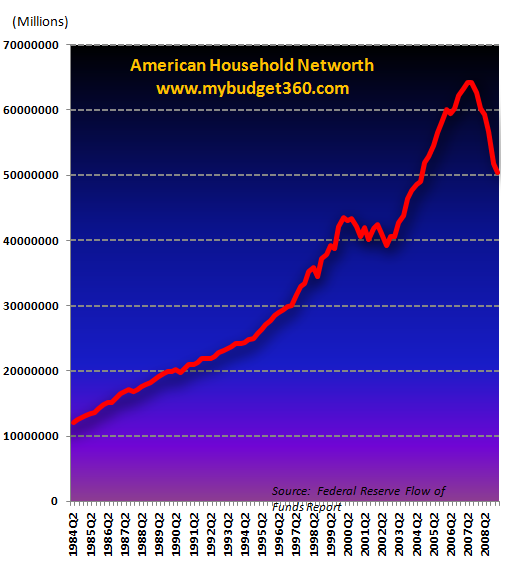
In the very short term, the biggest contributor to the short fall in revenue is the recession. People lost jobs, businesses collapsed, and federal revenue went from 18.5% of GDP in 2007 to 14.8% in 2010.[2]   

At the same time, spending went up. When people are unemployed, we pay out much more on unemployment insurance, Medicare, Medicaid, social security (people in their 60s throw in the towel and retire early) and so on.

Add to that the Recovery act under Obama and the TARP under Bush (much of which, however, was later paid back) and Federal outlays grew from 19% of the GDP in 2007 to 24% in 2010.[3]

Finally, add to all of that the fact that state and local governments have been firing people at a breakneck pace, driving up unemployment and driving down revenue from taxes. It is estimated that since 2008, as many as 500,000 people have been fired by state and local governments and cut salaries of even more, as a way to help balance their budgets, which is somewhat like bleeding a hemophiliac to see if it will make him get well. The problem in a recession is that a cycle has ended or a bubble has burst and people either have less money to spend or they grow concerned about spending it and the economy grinds down. The way to fix that is to put a lot of money back into the system which adds incomes to some and confidence to others until the machinery begins to run on its own. In this recession, following a small burst of crisis aversion money at the very beginning, our plan instead is to fire even more people and cut even more programs which will make the economic down turn even worse. When the when the housing bubble burst, we lost $4.2 trillion in real estate values. (Yes, that was inflated values, but people trusted it, borrowed against it and based their lives on it, so its loss is a real loss). When you add to that equities, businesses, and other forms of wealth, altogether the US lost around $12.2 trillion since its peak in 2007.[4] So, it’s easy to see how the $300 billion in the TARP program under president Bush (mainly to bail out Wall Street Banks and little for the real economy), and the stimulus package of $789 under President Obama (two-thirds of which were tax cuts to win Republican support and reimbursements to counteract state and local government cutbacks) were only a tiny fraction of what was needed to right the struggling economy.

Other, medium term causes:
Some of of the recession is attributable to the anti-regulation policies of the Bush Administration (a trend which began in the latter Clinton years), some of it is blindness of the Federal Reserve (keeping interest rates too low and allowing the housing bubble to get out of hand) and some of it is the greed and sin of mortgage originators and wall Street gamblers. So, there’s plenty of sin to go around for all of us.

The spikes in the deficit which are most attributed to policies of President Bush are three:

The cost of two unfunded wars.
The Bush Administration said that it would cost between $50-60 billion. Soon after the war began, official government estimates revised it upwards to $1 trillion. Many economists, most notably Linda Bilmes and Joseph Stiglitz,[5] now put the number at over $3 trillion, and say that it will continue to grow for decades. They include not just the fighting itself, but such things as disability payments to wounded veterans and the interest paid on the loans we took out to pay for the wars. More recently, the very well respected Watson Institute for International Studies at Brown University[6] brought together 20 scholars from many fields to bring out the most precise number yet on the costs and they put it at present to be just over $4 trillion, with the additions of interest and health care that Bilmes and Stiglitz included, which are estimated to be just over $250 billion per decade for the next forty years.[7]

The costs of the two major unfunded tax cuts
The Treasury Dept has estimated that costs of making the tax cuts permanent for everyone is $3.7 trillion over 10 years.[8]
The center on Budget ande Policy Priorities says the tax cuts will create almost $7 trillion in deficits from 2009 through 2019, including the associated cost of servicing the debt.[9]

The cost of unfunded Medicare Prescription Drug plan.
The Bush administration won support in Congress for his plan in a very tight vote by claiming that it would only cost $400 billion over ten years. After it passed they recalculated and discovered that they were off by about $800 billion but instead would be closer to $1.2 trillion. Since then projections are as high as $2 trillion.

Many progressives supported this, because there’s nothing wrong with increasing healthcare. But the question why there were no provisions to pay for it, and why the Bush administration blocked the administrators from using free market forces to “jawbone” down prices from the drug manufacturers. It could have been a golden opportunity to start lowering health care costs, but the legislation prevents itself us from doing that.

Speaking of health care…

In the Long term, Health Care is going to be the biggest driver of the deficit.
The costs are rapid and dramatic and will soon be unsustainable. There were a number of provisions in the Affordable Health Care Act that would have slowed its rise, but they were blocked, mainly by members of Congress who receive major campaign contributions from the health care industry (I’m not accusing them of anything, I’m just saying…)

If our health care costs were rising at the rate of the other wealthy countries of the world, we would not be having a long-term problem with health care.[10] (But, then, if we took advice from the rest of the world it would be an attack on the myth of American exceptionalism and it would mean becoming commie socialists and taking care of our own people and we could never live with such a thing.) Social Security, by the way, while slowly running out of money, is not a major driver of our growing debt. Its total shortfall is projected to be 0.7% of total GDP of the next 75 years. That will actually have a very small impact on the budget compared to the recession and tax cuts, which will, over the next decade, consume 1.5% and 2.6% of GDP respectively.[11]


[1] You can download an Excel chart of that by going here: www.whitehouse.gov/omb/budget/Historicals
[2] http://www.cbo.gov/ftpdocs/108xx/doc10871/01-26-Outlook.pdf
[3] Ibid.
[4] http://www.mybudget360.com/the-balance-sheet-recession-42-trillion-lost-in-residential-real-estate-value-yet-mortgage-debt-down-by-140-billion/
[5] Joseph E. Stiglitz and Linda J. Bilmes, “The true cost of the Iraq war: $3 trillion and beyond” (The Washington Post, Sunday, September 5, 2010  http://www.washingtonpost.com/wp-dyn/content/article/2010/09/03/AR2010090302200.html
[6] See “Costs of War” (http://costsofwar.org).
[7] Caring for US veterans, “Costs of War” http://costsofwar.org/article/caring-us-veterans.
[8] “Bush tax cuts: What you need to know,”  http://money.cnn.com/2010/09/15/news/economy/bush_tax_cuts_faqs/index.htm
[9] Kathy Ruffing and James R. Horney, “Critics Still Wrong on What’s Driving Deficits in Coming Years Economic Downturn, Financial Rescues, and Bush-Era Policies Drive the Numbers,” June 28, 2010 (www.cbpp.org/cms/?fa=view&id=3036#_ftnref6)
[10] http://www.oecd.org/document/30/0,3746,en_2649_34631_12968734_1_1_1_1,00.html
[11] http://www.cbo.gov/ftpdocs/108xx/doc10871/01-26-Outlook.pdf

Home Prices Fell Through The Floor. Mortgage Debt Didn't.

by Jacob Goldstein
In the past few years, home prices have fallen back to where they were before the bubble. But mortgage debt still has a long way to go.
  Bringing debt levels back down — what economists call de-leveraging — is a long, painful process. It's a key part of the bust in the boom-and-bust cycle, and it's often characterized by slow economic growth and high unemployment.
One recent study found that the de-leveraging process typically takes as long as the credit boom that preceded it. That study found that the recent credit boom lasted for about a decade, and ended in 2007.
So if the pattern holds true this time — and that graph above suggests it might — we will be in for several more years of de-leveraging.
The CalculatedRisk graph above is based on data from the Fed's latest Flow of Funds report, which came out today.

The Obama Deception: Why Cornel West Went Ballistic

http://www.truthdig.com/report/item/the_obama_deception_why_cornel_west_went_ballistic_20110516/

Posted on May 16, 2011

Don't Hold a Bake Sale

Recently, researchers Sanjai Bhagat and Brian Bolton studied the stock holdings and sales of the 14 CEOs who headed the 14 US financial institutions that received TARP funding to survive. The list included the losers after the 2008 meltdown (like Lehmann bros.) and winners (like Goldman Sachs).

All of them owned stock in their own financial institution and all of them traded their stock as individuals. Cumulatively, in 2000, the 14 CEOs held $6.8 billion of their own institution’s stock (about $485 per CEO) and from 2000 to 2008, their wealth from trades grew to $1.8 billion each.

When the crash came, they had paper losses of $2.0 billion in the crash, but their personal wealth had collectively grown by $649 million and they still had $939 million in net stock holdings. Even with all of their losses, they came out of the disaster with a profit of $46 million per CEO with another $67 million in their stock portfolio.

(And this is unrelated to their official compensation which averaged about $890 million per person, per year.)

Meanwhile, among the recipients of their greedy, immoral, and frequently illegal behavior, millions lost their jobs, millions more lost their homes, tens of millions were thrown into poverty, and even more kept their jobs but had severe declines in income. And not one CEO is in jail. 

For more on executive pay, see http://www.huffingtonpost.com/roger-martin/post_2008_b_857945.html

Some Kind of Deficit

Thomas Massaro, S.J. 
APRIL 18, 2011 

My friends are tired of hearing me bemoan how seldom public discourse ever gets around to addressing substantive issues of justice, such as the shape of public finance and budgeting. So I suppose I ought to be rejoicing that our nation is conducting serious high-level debates about economic priorities: fierce budget battles in Washington; statehouse rallies in Wisconsin in support of beleaguered public-sector unions; deficit hawks wielding the budget axe with a vengeance; Congressional wrangling on debt ceiling extensions.

Sure, I am glad that such matters at least occasionally eclipse celebrity scandals and have maintained a place on the front page alongside the recent crises in Japan and Libya. If I harbor disappointment, it is because so many of our political leaders are getting it all wrong and are endorsing the wrong priorities entirely.

The shape of the current budget debates changes from minute to minute, and there is no way to predict the eventual outcome. Will we avert a government shutdown, or will the reckless game of “chicken” prevent sensible bipartisan compromise? But beyond the ebb and flow of events, a key challenge is to stay in touch with the bedrock ethical principles that should guide any process of social deliberation. Spiritual writers use the phrase id quod volo (“that which I desire”) to capture this task of discerning proper and heartfelt goals. I deeply desire to live in a country that:
  1. Does not abandon its poor to starvation, homelessness and destitution. Deficit hawks always seem to circle above the prey of anti-poverty programs, especially those with shadowy names like community services block grants. But the more you know about the crucial assistance they provide to struggling people and neighborhoods, the more eager you will be to exempt these particular heads from the chopping block. Investments in community health centers, job training and early childhood development for disadvantaged groups, through programs like Head Start, will surely in the long run save money for government at all levels. Current proposals to cut them sharply amount to eating our seed corn. Whether we argue from outcomes or from ethics, it is easy to agree with a line from a recent letter from the U.S. bishops’ conference to the Senate: “In a time of economic crisis, poor and vulnerable people are in greater need of assistance, not less.”
  2. Protects the rights of workers to organize and engage in collective bargaining. Several cash-strapped states are seeking to limit the influence of public-sector unions. Even some Catholic voices, like the Rev. Robert Sirico of the Acton Institute, are piling on against the unions, demonizing them as impediments to prosperity and justice. To his great credit, Archbishop Jerome Listecki of Milwaukee stepped up to defend the constant tradition of church support for organized labor, writing: “Hard times do not nullify the moral obligation each of us has to respect the legitimate rights of workers.” Scapegoating and demonizing organized labor is a sure sign that the drift of public deliberation is turning away from authentic social justice.
  3. Maintains a commitment to the least privileged around the world. The slash-and-burn approach to budget-cutting has targeted the already modest funding the United States provides to assist programs crucial for development. Foreign aid makes possible life-saving public health and social service outreach to some of the poorest people on earth. Cut-ting humanitarian aid and international pover-ty-focused development assistance would seriously undermine our nation’s leadership position in the world community. Fighting epidemics and helping people grow subsistence crops are not optional expenditures for a responsible nation, no matter how badly it needs to pinch pennies.
Each of us could compile a much longer list of deep desires, but these three priorities will always be near the top of my list.

Sure, deficits are serious concerns, but the current budget process is heading in a direction that is ethically and practically indefensible. Leaders from both parties appear not to be acting on consistent principles and seem unaware of the real human costs they are imposing through austerity plans. When politicians hide behind the mantra, “We are broke,” I am often tempted to think, “Morally bankrupt may be more like it.”

Jon Stweart on Provisions in the "First Responders" Bill

I don't usually pass on videos, but this one struck me as unusually funny and biting at the same time. It's Jon Stewart of Comedy Central's "The Daily Show," commenting on the amazingly absurd provision in the long-awaited "First Responder" bill that helps Fire Fighters and others who were made ill by working long hours in the rubble of the World Trade Center following 9/11. Even though he is funny about it, he can barely contain his rage over the evil, inhumane, and just stupid provision.

The scene is in two parts below.

Enjoy (more or less),

Stan
 

Part one:


Part two:

Warning! Inequality May Be Hazardous to Your Growth

There is little question that growing income inequality is dangerous for democracy. Money as a form of "Freedom of Speech" is now firmly a part of  American law and its impact on swaying elections and passing bills is increasingly clear. However, it seems that the gap could also be bad for a country's economy. The more money that gets sucked out of the economy and into the accounts of the wealthiest classes, the smaller are the resources the country has with which to sustain growth times and bounce back in recessions.

In a recent note on the IMF Blog, shares research they did on the relationship between income and economic stability and found that countries that have a declining income gap (like Brazil) have longer booms and shorter busts. And countries with a widening income gap (like the US) are just the opposite: longer busts and shorter booms. Our experience in the recent sluggish recovery from the 2001 recession and non-recovery from the 2008 recession seem to support their research.

Here is an excerpt from the article, "Warning! Inequality May Be Hazardous to Your Growth," (Note that bold faced print was in the original.)
Some time ago, we became interested in long periods of high growth (“growth spells”) and what keeps them going. The initial thought was that sometimes crises happen when a “growth spell” comes to an end, as perhaps occurred with Japan in the 1990s. 
We approached the problem as a medical researcher might think of life expectancy, looking at age, weight, gender, smoking habits, etc. We do something similar, looking for what might bring long “growth spells” to an end by focusing on factors like political institutions, health and education, macroeconomic instability, debt, trade openness, and so on. 
Somewhat to our surprise, income inequality stood out in our analysis as a key driver of the duration of “growth spells”. 
We found that high “growth spells” were much more likely to end in countries with less equal income distributions. The effect is large. 
For example, we estimate that closing, say, half the inequality gap between Latin America and emerging Asia would more than double the expected duration of a “growth spell”. Inequality seemed to make a big difference almost no matter what other variables were in the model or exactly how we defined a “growth spell”.
Inequality is of course not the only thing that matters but, from our analysis, it clearly belongs in the “pantheon” of well-established growth factors such as the quality of political institutions or trade openness. 
While income distribution within a given country is pretty stable most of the time, it sometimes moves a lot. In addition to the United States in recent decades, we’ve also seen changes in China and many other countries. Brazil reduced inequality significantly from the early 1990s through a focused set of transfer programs that have become a model for many around the world. 
A reduction of the magnitude achieved by Brazil could—albeit with uncertainty about the precise effect—increase the expected length of a typical “growth spell” by about 50 percent. 
The upshot? It is a big mistake to separate analyses of growth and income distribution. A rising tide is still critical to lifting all boats. The implication of our analysis is that helping to raise the lowest boats may actually help to keep the tide rising!

The “Hire Abroad, Fire at Home” Strategy

There was a very interesting article in The Wall Street Journal this morning by David Wessel. I hope it gets commented on by politicians and the mainstream press (including Wessel’s own paper).

It has to do with the employment strategy of the major employing corporations in America.

According to data from the US Commerce Department during the 2000s, multi-national corporations based in the US cut their domestic work force by 2.9 million while expanding it overseas by nearly as much at 2.4 million. The irony of that, of course, is that the 2000s were touted as an era of low taxes, low regulations, with an abundance of incentives to help corporations grow and make money for the rest of us. They did grow, but just didn’t make any money for the rest of us. Income and jobs stagnated during that time for the vast majority of Americans. The recovery from the 2001 recession was one of the most sluggish on record, and of course any minimal gains we received were wiped out in 2008.

This is interesting because by comparison, the nineties are now being ridiculed and dismissed by many on the right as a high tax, high regulation era that stifled growth and discouraged corporate profits. But, again according to the US Commerce Department’s numbers, in those years the multi-nationals created 4.4 million jobs in the US and 2.7 million elsewhere. They created almost twice as many domestic jobs as international jobs. Altogether, they employed 21.1 million here and 10.3 abroad. Not bad for a country led by a godless, commie, socialist, philandering, murderous tax and spend liberal.

Click here to go to the article in the Journal

 And click here for a summary of it at the Business Insider.